
Succession Is the Gallery's Last Great Deal
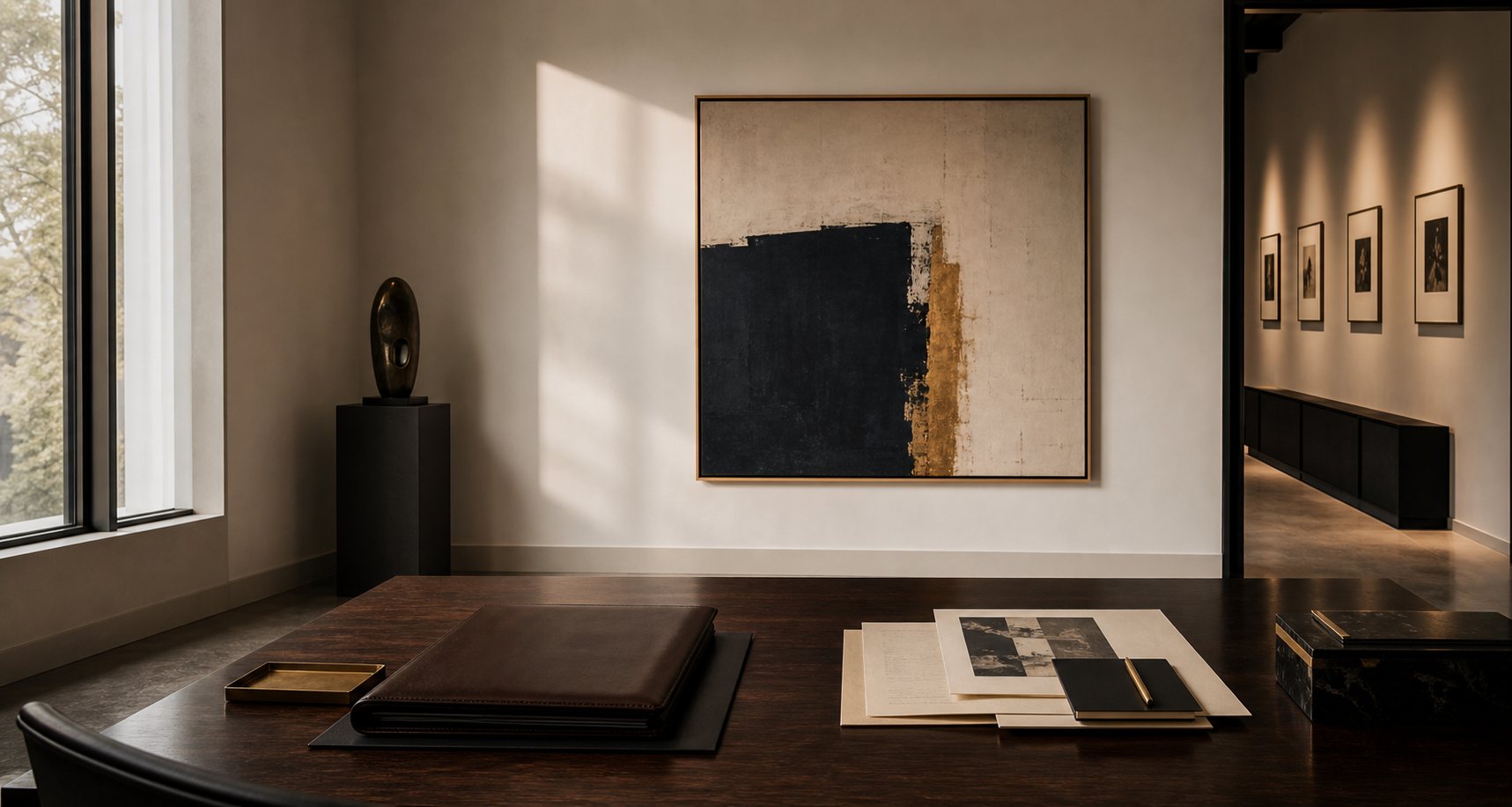
A gallery is one of the few businesses that is routinely mistaken for its founder. The eye, the relationships, the program — for decades they live in one person, and the market prices the gallery accordingly. Which is why succession is not an administrative event at the end of a career. It is the last great deal a founder will ever do, and like every deal, it rewards preparation and punishes improvisation.
This note is a way of thinking, not advice. Every gallery's circumstances differ, and the right path depends on facts no general essay can know.
The options are wider than "sell or close"
Founders often frame the endgame as a binary: find a buyer or turn off the lights. In practice the menu is longer. A family transition, where the next generation takes the program forward. A management buyout, where trusted directors become owners over time. A merger with a complementary house. A partnership or minority investment that brings capital and continuity while the founder remains. An orderly wind-down that honors artists and consignors. Each carries different economics, different timelines, and a different meaning for the name above the door.
The point is not that one option is best. It is that the menu shrinks with every year the question is deferred. The founder who starts thinking five years out chooses among six paths; the estate that inherits the question chooses among two.
The menu shrinks with every year the question is deferred.
What actually carries value
Galleries trade on relationships, and buyers know it. What survives a founder's departure — and therefore what carries value in any transition — tends to be the durable, documented parts of the business: the stability of the artist roster and the agreements behind it; the quality and provenance of inventory; the consignor relationships and their terms; the program's identity and the team that executes it; the leases, the fair positions, the client records.
Much of this can be strengthened years before any transaction. Handshake representation can become documented representation. Key-person dependence can be diluted by giving directors real client relationships. Financial records kept for tax purposes can be rebuilt to tell the story an acquirer or investor needs to read. None of this obliges a founder to sell; all of it preserves the option to.
Timing and confidentiality
The art world is small and talks. A succession rumor can unsettle artists, embolden competitors, and stall consignments long before anything is signed. Serious transitions are therefore prepared quietly: options analyzed, the business readied, potential counterparties understood — all before any approach is made. When conversations do begin, they begin deliberately, with a short list, under confidentiality, and with the founder's narrative set in advance rather than assembled in reaction.
Where independent advice fits
Most founders will do this once. The parties across the table — acquirers, investors, larger houses — may have done it many times. Independent advisory exists to level that asymmetry: to map the realistic options, prepare the business, frame valuation honestly, and run a discreet process in which the founder's objectives, not the transaction's momentum, set the terms. Because we hold no inventory and place no products, our only stake is the outcome that serves the founder.
The galleries that navigate succession well share one habit: they treated it as a strategic question while it was still optional. The best time to think about the last great deal is long before it is the only deal left.
This article reflects general perspectives for informational purposes only and is not investment, legal, tax, or financial advice, nor an offer of any service. See our Disclosures.